

About us

Quantum Rehab is a leading brand in complex mobility solutions.

Learn everything about Quantum Rehab

Dedicated to enhancing mobility and freedom

Dedicated to helping people with complex rehab needs live active and independent lives, Quantum Rehab is a global leader in the design and manufacture of advanced, consumer-inspired power wheelchairs and mobility technologies, including the Edge 3, Q6 Edge 2.0, 4Front 2, iLevel seat elevation systems, TRU-Balance 4 Power Positioning Systems, and Stealth Products cushions and components.

Our Mission

Quantum Rehab is dedicated to being the premier global innovator of consumer-inspired complex rehab mobility technologies that not only deliver medical comfort, but also the features needed toward overall well-being, serving the entirety of users’ activities of daily living.

Innovation & Care

Quantum combines cutting-edge technology with real-world usability. Our dedicated team of engineers, therapists, and wheelchair users ensures that every product is consumer-inspired, clinically focused, and rigorously tested in our high-tech R&D facility.

Global Leadership

As an innovator in complex rehab mobility, Quantum sets the standard for performance, reliability, and user-centered design. Headquartered in Duryea, Pennsylvania, Quantum also has operations in Australia, Canada, China, France, Germany, Italy, the Netherlands, New Zealand, and the United Kingdom.

1986 - 2025

Our company history

Explore our product range

Ride with freedom

Power Chairs

When it comes to complex rehab mobility, Quantum power chairs are in a class of their own. With a variety of models designed to meet different needs, there is a Quantum chair for every user. From the ultra-narrow Edge 3 Stretto for tight spaces to the versatile 4Front 2 and Q6 Edge 2.0, you are sure to find the perfect chair to enhance comfort, independence, and daily functionality.

Customize your ride

Accessories

Quantum’s wide range of accessories ensures that your power chair fits your lifestyle perfectly. From advanced seating and positioning systems to practical items like fender lights, backup cameras, and Bluetooth connectivity, every accessory is designed to enhance your mobility experience.

Get up in ease

Power lift recliner

If you’re searching for a power lift recliner that is the ultimate in style and performance, look no further than Pride Power Lift Recliners. Our power lift recliners are designed to be a functional and fashionable part of your home décor. Each lift recliner is built for quality and reliability, so you can enjoy it worry-free for many years to come.

Meet Pride Mobility

World leader in personal mobility solutions.

Pride Mobility is dedicated to helping people live active, independent lives. As a global innovator, Pride designs and manufactures mobility scooters and power chairs that combine comfort, reliability, and practical features to support everyday mobility and overall well-being.

Stay up to date

Articles about Quantum

General

Why Multiple Power Functions Matter in Powerchair Prescription

When it comes to prescribing a powerchair, especially for users with complex mobility needs, the inclusion of multiple powered seating functions can make a significant difference. While tilt or recline alone may offer some benefits, using these features in combination has been shown to deliver far more effective clinical outcomes.

When tilt and recline are used together, they form a clinically significant system that offers better pressure relief, improved positioning, and greater functional independence.

More Effective Pressure Management

A major reason clinicians recommend powered seating functions is pressure relief. Tilt helps redistribute body weight from the seat to the backrest, while recline shifts the body into a more open position. When combined, these functions allow users to achieve much greater pressure redistribution than either feature alone.

Used together, tilt and recline can reduce pressure on vulnerable areas and support skin integrity, especially for those at high risk of pressure injuries.

Supporting Joint Health Over Time

Recline is particularly helpful for allowing movement through a joint’s full range of motion. For users with limited mobility or neurological conditions, this movement is crucial to reduce the likelihood of contractures; permanent shortening of muscles and joints that can restrict function.

Incorporating recline alongside tilt provides opportunities for postural variation and movement throughout the day, helping to protect joint health over time.

Reducing Shear and Sliding Risks

A common issue with recline-only systems is forward sliding of the pelvis, which increases shear forces on the skin. Adding tilt before recline can help hold the pelvis in place and maintain alignment as the backrest opens. This combination reduces shear, enhances stability, and improves safety.

Easier Self-Repositioning

Many users experience gradual forward movement in their seating position throughout the day. When both tilt and recline are available, the user can use gravity to assist with repositioning. For example, tilting beyond 45 degrees and reclining the backrest allows the body to naturally slide back into place.

This reduces reliance on a caregiver and allows users to manage their own posture more independently.

Improving Circulation and Managing Swelling

Poor circulation in the lower limbs is a common issue for wheelchair users. Elevating the legs can help, but when tilt is used alone, the hips remain flexed, which may limit circulation. By adding recline, the user can extend the knees and allow the legs to elevate fully while reducing strain on the hamstrings.

This combination helps promote venous return and may assist in reducing oedema (swelling) more effectively.

Supporting Comfort Throughout the Day

Remaining in a fixed position for extended periods can lead to fatigue and discomfort. With access to tilt and recline, users can adjust their posture throughout the day to stay comfortable and alert. Whether resting, eating, using a device, or engaging socially, a range of seating positions can help maintain energy levels and overall wellbeing.

Enhancing Transfer Safety

Transfers are a regular part of many users’ routines and can be a risk point for both the individual and their caregiver. Tilt can help stabilise the trunk before a transfer, while recline may be useful for supine sliding transfers when paired with leg elevation.

Having more control over body positioning can also reduce the number of transfers needed throughout the day, which helps minimise injury and strain.

Improving Trunk Control on Slopes

Maintaining posture while navigating uneven terrain or slopes can be challenging without adequate trunk support. Using tilt and recline together allows for trunk positioning adjustments that support better balance and safer driving, especially on outdoor surfaces.

Better Function for Communication, Breathing, and Swallowing

Posture doesn’t just affect comfort, it impacts essential functions like speech, respiration, and swallowing. Reclining the back and adjusting the head position can improve chest expansion, making breathing easier and more effective. This can lead to better speech, reduced fatigue, and a lower risk of aspiration during eating.

For users who rely on augmentative communication or vision-based technologies, posture adjustments also help maintain clear visual access.

Managing Blood Pressure Changes

Some users experience a drop in blood pressure when moving from lying down to sitting upright, known as orthostatic hypotension. Power recline can be used to help manage these symptoms by gradually transitioning between positions. Combined with tilt, it allows users to regulate their posture in a way that supports cardiovascular stability.

Supporting Bowel and Bladder Care

Recline also plays a role in enabling certain daily routines such as catheterisation or bowel management. It gives users and caregivers better access and positioning for these tasks, which can be carried out more safely and with greater dignity.

While power tilt or recline can each be beneficial, the combined use of both creates a more adaptable, clinically appropriate seating system. For users with long-term or complex needs, having multiple power options allows for better pressure management, improved posture, and a wider range of functional movement.

When evaluating a powerchair prescription, consider whether a single function truly meets your client’s needs or whether multiple power functions will deliver the long-term outcomes they deserve.


References

Dicianno, B.E., et al. (2009). RESNA Position on the Application of Tilt, Recline, and Elevating Legrests for Wheelchairs. Assistive Technology, 21(1), 13–22.

Dicianno, B.E., et al. (2015). RESNA Position on the Application of Tilt, Recline, and Elevating Legrests for Wheelchairs – Literature Update. Assistive Technology, 27(3), 193–198.[/vc_column_text][vc_empty_space][/vc_column][/vc_row]

General

Improving Customer Support with Interactive Assist

In the world of assistive technology, efficiency and timely support are important to maintaining user independence. Interactive Assist is transforming how providers troubleshoot and resolve issues remotely, minimising downtime and improving client satisfaction. This innovative solution bridges the gap between clients and providers by enabling real-time diagnostics and adjustments without requiring an in-person visit.

What is Interactive Assist?

Interactive Assist is a remote troubleshooting and programming tool that allows providers to connect with clients in real time to diagnose and resolve technical issues. Whether it’s a power wheelchair experiencing performance issues or the need to reprogram specialty controls, this system streamlines communication and reduces the need for multiple service visits.

Key Benefits of Interactive Assist

  1. Faster Troubleshooting

When a client experiences issues such as veering to one side, slow driving, or reduced battery life per charge, they can call their provider for immediate assistance. Interactive Assist grants providers remote access to the system, allowing them to monitor, diagnose, and guide clients through solutions without waiting for an in-person appointment.

For example:

If a client reports slow driving despite turning up the speed potentiometer (speed pot), the provider can check the system remotely.

If the display still shows the speed pot as being turned down, the provider can verify whether the control itself is faulty and ensure the correct parts are brought for repair.

  1. Efficient System Programming

Clients who need environmental (IR) programming can have their systems updated remotely. Instead of waiting for an in-home visit, providers can:

  • Enable IR functions in the enhanced display.
  • Build and customise menu trees for IR use.
  • Save programming settings for future adjustments.

This means that caregivers and clients can immediately access new functionalities without unnecessary delays.

  1. Reducing On-Site Visits

Sometimes, specialty controls require installation, but a programmer may not always be available for an in-home visit. With Interactive Assist, a remote technician can make the necessary programming changes while an on-site technician completes the installation. This eliminates the need for multiple service trips, saving both time and resources.

  1. Real-Time Display Monitoring

One of the standout features of Interactive Assist is remote display monitoring. Providers can view a client’s drive screen in real time, allowing them to:

  • Observe faults as they occur, eliminating false error code reports.
  • Educate clients on menu navigation and system settings without needing an on-site visit.
  • Provide immediate solutions for common troubleshooting issues.

A Game-Changer for Client Independence

Interactive Assist is more than just a diagnostic tool; it’s an essential solution for empowering clients and caregivers. By reducing wait times for service, enabling real-time troubleshooting, and offering remote programming capabilities, this technology significantly enhances the user experience.

Clients can enjoy a higher level of independence, while providers can deliver more efficient, cost-effective, and responsive support. In an era where technology is shaping accessibility, Interactive Assist is paving the way for a smarter, more connected approach to assistive device management.

Are you a provider looking to improve service efficiency? Consider integrating Interactive Assist into your workflow and experience the benefits of remote troubleshooting and programming today!

No matter how complex your needs, Quantum Rehab has a product which will ensure you can go about your daily tasks with as much independence and self agency as possible.

If you would like to contact us to chat through your specific needs in more detail, please do not hesitate to call us direct on 01869 324600, or drop us a line through our online contact form.

Alternatively, you can reach out to our team of Quantum Rehab Specialists to find out more.

General

How Mobility Aids Promotes Health and Wellbeing

Mobility aid equipment can help people with limited mobility move around more easily indoors and outdoors. A wide range of mobility aids are available to assist various mobility issues, each offering the user a multitude of benefits. They are pivotal for people with limited mobility, especially when it comes to their health and wellbeing, as mobility aid equipment improves the user’s quality of life. Users of mobility aids can be the elderly, people with medical conditions, injuries and disabilities.

At Quantum Rehab, we provide people with limited mobility with a collection of comfortable and supportive wheelchairs. From manual wheelchairs to electric motor powerchairs, there is a mobility aid solution for a wide variety of mobility needs. Discover how these wheelchairs, and other mobility aids, promotes health and wellbeing, positively changing users’ lives.

Woman on mobility scooter riding through town


Types of mobility aids

There is a plethora of mobility aids available to suit various mobility issues and the individual’s needs. Each type of mobility aid equipment serves a different purpose and so it’s vital to ensure you are using the correct aid for you and your needs.


Mobility scooters

Mobility scooters are an ideal aid for travelling long distances when you are unable to walk for long periods of time. They are also a great tool to use for people with control of their upper body to be able to steer and manoeuvre the scooter. They can come with different features to suit your needs.

You can get lightweight and foldable scooters that are perfect for travelling with, especially when going abroad or on a long road trip. You can also get three-wheel scooters that are easier to manoeuvre and are often lighter, allowing many people to get out and about. Mobility scooters can also suit outdoor adventures as they can come with four wheels which offer stability and can tackle all sorts of terrains.


Walking sticks and canes

For people who have little balance or are weaker in their legs, then walking sticks and canes are an ideal mobility aid. These offer support and shifts weight from the legs to the upper body so that strain on the lower limbs is reduced.

There are a few types of sticks and canes available to suit various mobility issues. However, this mobility aid equipment is beneficial for people who can walk but need assistance with strengthening their legs. You can get standard sticks and canes that provide basic support and are adjustable to suit your required height to help you walk comfortably. There are also offset canes that are excellent for distributing your weight evenly helping to keep you balanced when you walk. These are perfect for people with little to no balance when walking.


Wheelchairs

Wheelchairs are a vital mobility aid for people with severe mobility issues or those who can’t walk at all. They offer users mobility to get around wherever and whenever they please, changing their lives for the better. Wheelchairs come in various forms with lots of different features to suit a range of needs, making it easier for people with limited mobility to explore the outdoors and move freely around indoors.

The two main wheelchair options are a manual wheelchair and an electric motor wheelchair. Manual wheelchairs require you to have movement in your upper body to push yourself along. These are ideal to use for short periods of time or for those who can self-propel. Manual wheelchairs are also often used for a variety of sports to manoeuvre where you need to go. Electric motor wheelchairs are perfect for longer periods of time or for those with limited upper body movement and strength. These can be operated by switches, buttons and joysticks to move easily and quickly around. They are great for indoors and outdoors and come with various features to suit your requirements, such as outdoor electric wheelchairs for rugged and difficult terrains.


Walkers and rollators

Walkers and rollators are ideal for people who can move but need extra support than walking sticks and canes can give them. These offer better stability as they have a four-point contact with the ground. They can come in a few different forms, such as standard walkers which offer maximum support due to the sturdy frame and four legs. There are also two-wheeled walkers that come with wheels on the front legs to help with moving the walker around. These are ideal for people with less upper body strength as they can easily push this walker around while gaining strength in the legs through the support the walker gives.

Rollators often have a seat to rest on when needed, which is perfect for people who can walk short distances but who often get tired or sore from walking. They also have four wheels, brakes and a basket making these the ideal choice for heading outdoors.


How do mobility aids promote health and wellbeing?

Mobility aid equipment can promote health and wellbeing in numerous ways, giving users multiple benefits and a positive change to their lives. Mobility aids can drastically change the lives of many with mobility issues, adding value and improving their quality of life which, in turn, aids with their physical and mental health.


Reduces aches and pains

Mobility aids can help users with any aches and pains, as well as sores. They reduce nasty flare-ups and alleviate the pressure on key body parts. They can support your hips, legs, ankles, and knees or even give you neck support when needed.

Aches and pains often flare when people with limited mobility aren’t fully supported, comfortable or aren’t using the correct mobility aid for them. Everyone can reduce aches and pains when using the right mobility aid but particularly people with chronic pain conditions or arthritis can benefit as painful flare-ups occur more with these conditions.


Improves independence and gives freedom

Using mobility aid equipment allows people to gain independence and freedom. This is because they can move around freely and carry out daily activities with no assistance from someone else. People with limited mobility can independently move around indoors and outdoors doing daily tasks and exploring the world. This means they can do what they love more without needing to rely on anyone else and even create new hobbies.

Having the freedom to go wherever they want at any time they like, boosts users’ confidence and improves their mental wellbeing instantly. They can feel happier from gaining vital fresh air and gain joy from daily activities and hobbies they usually need someone to help with.


Helps with socialising and exploring the world

As people with mobility issues can get out and about more when using a suitable mobility aid, it allows them to explore places they may never have seen before. They can enjoy the freedom of the outdoors, taking in various history and culture from all around the world. Mobility aids also allow users to travel more and go on holidays, ensuring they get to see incredible places just like everyone else.

By heading outdoors more, people with reduced mobility can have more opportunities to socialise with others. They can join in with social activities and enjoy new hobbies to meet new people due to the independence mobility aids give. These aids can make it possible for users to attend gatherings, visit friends and family and even go shopping. This can massively improve their mental health as they won’t feel isolated or lonely as they can mix and socialise with a wide variety of people. Plus, people with mobility issues can also gain advice, help or listen to others to lift a weight off their shoulders and make them feel happier.


Enhances safety and stability

Mobility aid equipment can enhance users’ safety and stability. This is because mobility aids reduce the risk of falls and injuries as they support users and heighten their stability. This is particularly the case for the elderly and people with little to no balance as they can be stabilised when walking or moving.


Mobility aids at Quantum Rehab

Here at Quantum Rehab, we have a selection of mobility aids to help support you daily and change your life for the better. We have a plethora of wheelchairs to suit your needs that all support different mobility issues. Our manual wheelchairs and paediatric disability strollers incorporate various components to accommodate the needs of individuals requiring mobility aid. They are perfect for short-term independence, getting around the house to do daily activities and are great for heading outdoors with someone to assist.

To reap the most benefits to your health and wellbeing our electric motor wheelchairs are a great option. These can be used for travelling, long periods of time outdoors and full independence daily. We have a wide selection of electric wheelchairs for various interests and hobbies that each tackle different terrains.

If you are looking for the ideal mobility aid equipment for you or have any questions about our wheelchairs, then please contact us.


General

Innovations in Electric Mobility Chair Design

The operational features of electric mobility chairs now include several innovative technologies. These advancements are specifically designed to ensure a smooth and hassle-free experience when using Quantum powerchairs.

While every individual’s needs are different and complex, an electric mobility wheelchair design has four fundamental criteria that need to be met:

  • What are the user’s overall mobility needs? Will the chair be used on a permanent or occasional basis?
  • What is the main environment in which the chair will be used? Do you operate primarily within a smooth, urban corporate environment where an indoor electric mobility chair can easily navigate on smooth floors, or is a more rugged countryside terrain the norm?
  • What activities and lifestyles need to be considered?
  • What changes need to be accommodated with regards to comfort, safety and posture?

Browse our range of power chairs here

Once the best electric mobility chair has been selected, the next step is to kit it out with the necessary technological innovations to drive the chair in the most smooth, efficient and user friendly way possible.

Adapting Electric Mobility Chairs for Adults and Children Alike

Quantum Rehab is a UK industry leader when it comes to electronic drive controls, offering a range of products that are designed to make the use of its powerchairs much more user friendly.

The key design features include an ergonomic design, a user-friendly display screen, responsiveness, and adaptability to future developments. Perhaps most important of all, is that the technology promotes a greater feeling of independence for the wheelchair user.

For example, a range of Quantum’s electric mobility chairs are integrated with the Q-Logic 3, and advanced drive control system that not only operates the chair itself, but that can also be integrated with the user’s own Smart devices so that they can operated from the Q-Logic 3 controller and screen interface.

What this means is that the electric mobility chair user will be able to operate various home appliances and systems that use infrared (IR) remote controls, such as the central heating, television, lights and computer, all from a single screen. The sense of independence and empowerment that this degree of control can significantly impact an individual’s sense of self-worth and confidence, minimising dependence on a carer.

Check out our Q-Logic 3 system here

If required, the chair can be fitted with the Q-Logic 3 Enhanced Display, which gives the wheelchair user a larger, even more user-friendly interface screen which is Bluetooth connected to a range of Smart devices.

Reducing Anxiety with Electric Mobility Chair Online Diagnostics

Even the best electric mobility chair on the market is susceptible to breaking down on occasion, or developing a bug or two. This is more than inconvenient for someone who relies on the chair to achieve the simplest of daily tasks.

Quantum’s Interactive Assist, which can be used with the Q-Logic 3 Advanced Display, is an app based diagnostic tool that connects the chair to the provider’s programming station. Should a problem arise with the chair, the user can contact a technician, who has access to the chairs error log, direct via the app. If appropriate, they can direct the user to a simple recalibration, or advise on the next step.

Check out our Interactive Assist here

Optimising Comfort and Posture

Whether assessing an electric mobility chair for elderly individuals, or for the youngest of children, being aware of pressure points around cushions, backrests and seating is vital for the avoidance of pressure sores and a safe and comfortable seat.

BodiTrak2 Pro is designed to monitor potential pressure issues by mapping the seated posture of the power chair user, giving clinicians and carers a clear picture of potential issues and allows them to readjust seating protocols accordingly. This can save the wheelchair user from the pain and indignity of developing uncomfortable pressure sores which can open them up to infection and a long recovery.

Check out the BodiTrak system here

Maintaining an ongoing commitment to user safety and comfort is further illustrated through Quantum’s collaboration with market leaders in specialised accessories and equipment. Companies such as Stealth Products have experience and expertise in the adaptation and modification of an electric mobility chair, to meet the individual needs of each and every user, whatever their specific needs may be.

Quantum works with partners such as Stealth, safe in the knowledge that they are truly specialists in designing and fitting accessories that match Quantum’s own values of empowering and promoting independence.

Check out Stealth products here

No matter how complex your needs, Quantum has a wealth of knowledge and products which will ensure you can go about your daily tasks with as much independence and self agency as possible. If you would like to contact us to chat through your specific needs in more detail, please do not hesitate to call us direct on 01869 324600, or drop us a line through our online contact form.

What are you looking for?

Cannot find what you are looking for?
View our Product range.

What are you looking for?

Cannot find what you are looking for?
View our Product range.

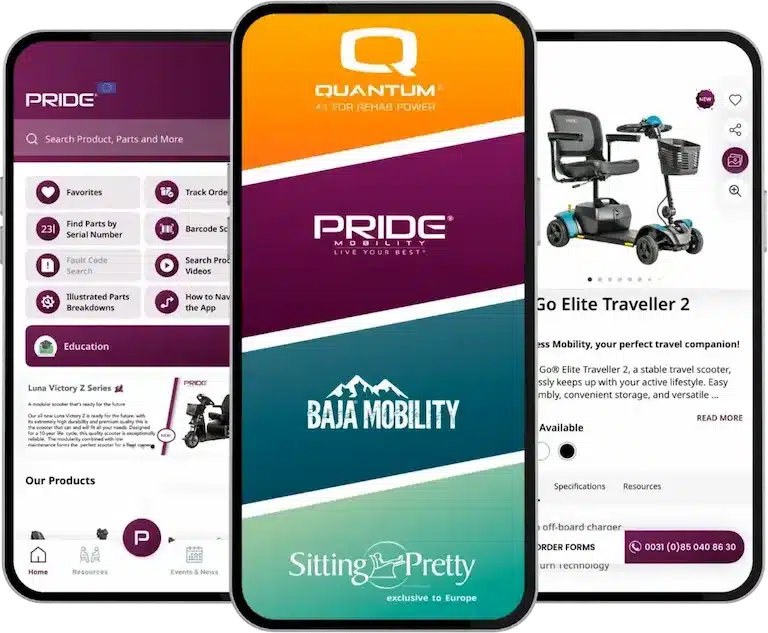
PQ-365 App

Get instant access to products, manuals, order tracking, and more with the PQ-365 app. Download the Pride Mobility app today.